
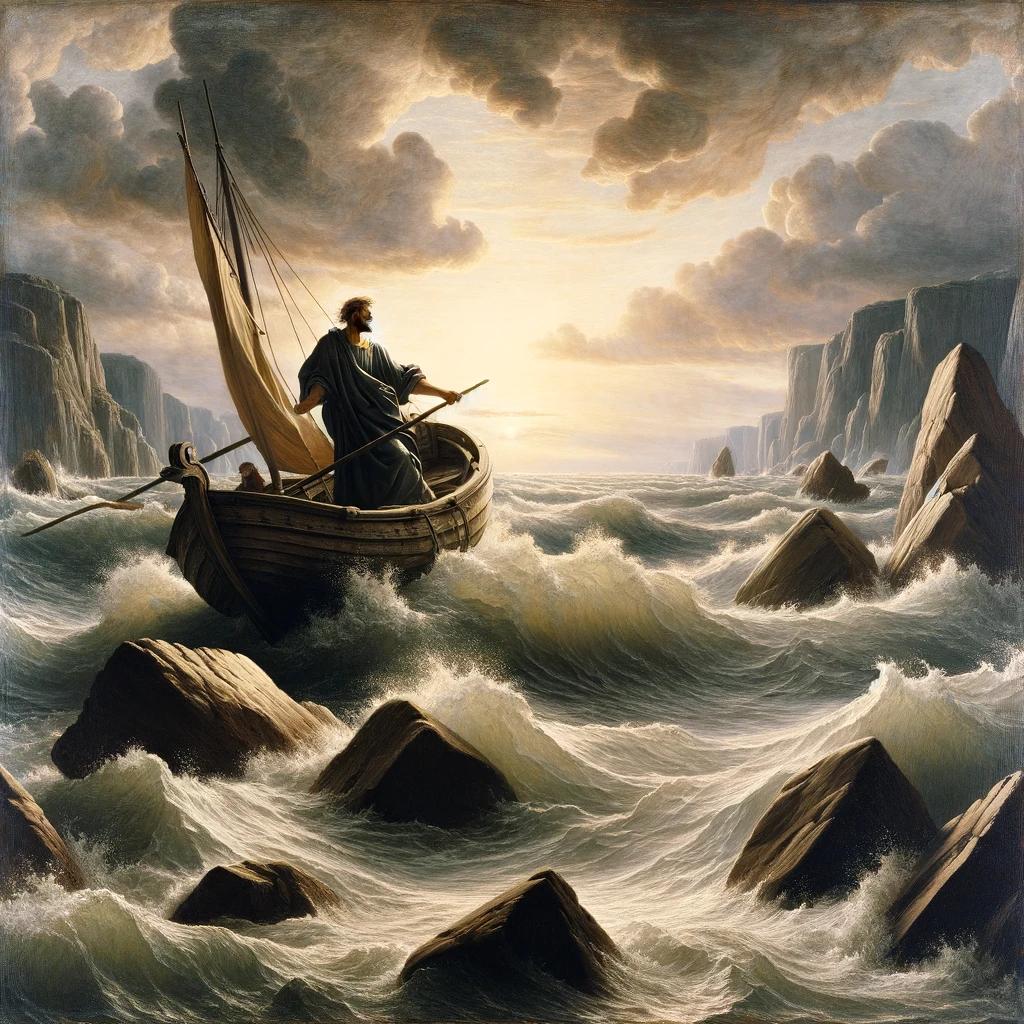
Introduction . — There is none of a man’s possessions which is to be more carefully protected than his faith. There is not one of his holdings which is more constantly threatened. Sailing over life’s sea, rocks imperiling his faith are piercing the waves everywhere, and narrow indeed is the channel through which he is to pilot his way in safety. We assume that faith is more precious to him than anything else that is his. It is not an assumption ; it is a certainty, and a dread one.
I. What is a man’s faith to him? Faith is the “ argument of the unseen.” It is a chart well mapped out and marking unmistakably the points of danger on the ocean of life. It describes the port whence he sails; it directs, in all kinds of weather, his journey toward the haven of his destiny. It assures him that he derives his being from God — that his whole being must tend Godward, and it shows him the only way. It speaks of the unseen — of the unseen of his past, of his present, of his future. It furnishes him with the knowledge of the things that have been and are and will be. It brings within his ken the whole path of salvation. Impossible is it to calculate the advantages of faith. Impossible almost is it to enumerate them. Such being the pricelessness of faith, what are —
II. Its perils ? The perils which faith is exposed to art manifold and ubiquitous and extreme and insidious. They spring from every quarter. They wear the guise of friendship; they borrow the garb of angels of light; they underlie adversity; they go hand in hand with success. Society is bristling with those dangers; so is wealth, and so, beyond a doubt, is the flesh. The arch enemy of mankind has his spear raised ever to wound and, if possible, kill faith. The world passes it by — faith is not fashionable; it savors too much of poverty and low birth and ignorance. Society sometimes wears its livery because it is a token of respectability. But faith is a reproach to the thoughts and workings of society; is a hindrance; is a menace to its pleasures. The flesh has views diametrically opposed to those of faith. Let us eat and drink and be merry, for tomorrow we die. Such is the chorus of the flesh, and the tones of faith can not be heard, so boisterous is the singing of the flesh, or, if heard, they weaken the enthusiasm and mar the gaiety. As for the devil — he is a murderer and a liar from the beginning, and faith is his persistent and indomitable foe and accuser and judge.
III. Other dangers . Ignorance of the individual. He does not know even the essentials of his faith. What he knows not, he loves not, and if it bars his way, he hates. The ambition and the greed and the selfishness of the individual weaken faith. So does riotous living; so do the passions gratified unlawfully; so does evil companionship; so likewise free and loose thinking about matters of faith. More than anything else the lawless literature of the day — books that are immoral, books atheistic, books cynical, books without ideals higher than the inspirations of mere nature, books ridiculing, caricaturing religion, its tenets and practices. These are the dangers. The need of guarding against them is obvious. Keep the faith. It will keep you here and hereafter.

Apologetica: Elementary Apologetics for Pulpit and Pew
by Halpin, P. A. (Patrick Albert), 1847-1920
Leave a Reply